
Have you ever noticed sudden mood changes during your cycle—feeling confident and energetic one week, then anxious or emotional the next? You’re not imagining it. These shifts are closely linked to ovulation and hormonal changes in your body.
Understanding how ovulation affects your mood can help you gain better emotional control, improve relationships, and make smarter lifestyle choices. In this guide, we’ll break down the science, patterns, and practical tips in a simple, Google AI–friendly format.
What Is Ovulation?
Ovulation is the phase in your menstrual cycle when your ovary releases an egg. It usually occurs around the middle of your cycle (around day 14 in a 28-day cycle, but it can vary).
This phase is controlled by key hormones, including:
- Estrogen
- Luteinizing hormone (LH)
- Progesterone
These hormones don’t just affect your reproductive system—they also influence your brain and emotions.
How Hormones Affect Your Mood
Your brain chemistry is closely linked to hormonal fluctuations.
1. Estrogen: The “Feel-Good” Hormone
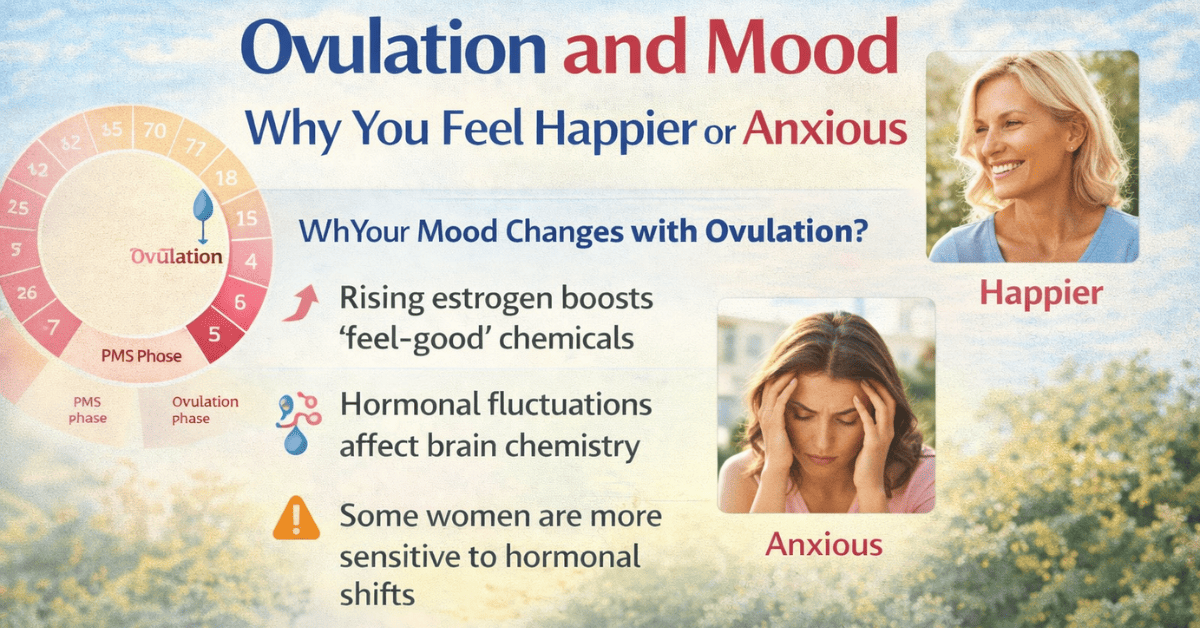
Estrogen peaks just before ovulation and has a powerful effect on mood.
What it does:
- Boosts serotonin (the happiness hormone)
- Improves energy levels
- Enhances confidence and social behaviour
This is why many women feel:
- Happier
- More attractive
- More outgoing
2. Progesterone: The Calming (or Sometimes Stressful) Hormone
After ovulation, progesterone rises.
Effects include:
- Relaxation and calmness
- In some cases, increased anxiety or irritability
If progesterone fluctuates or drops quickly, it can lead to mood instability.
Why You Feel Happier During Ovulation
Many women experience a noticeable emotional “high” during ovulation.
Reasons Behind This:
- Increased estrogen boosts serotonin levels
- Higher dopamine improves motivation and pleasure
- Your body is biologically primed for social interaction
Common feelings during ovulation:
- Confidence
- Positivity
- Motivation
- Increased libido
This phase is often referred to as your “peak mood window.”
Why Some Women Feel Anxious Instead
Not everyone feels great during ovulation. Some experience anxiety or mood swings.
Possible Reasons:
1. Hormonal Sensitivity
Some individuals are more sensitive to hormonal changes, leading to:
- Anxiety
- Restlessness
- Mood swings
2. Rapid Hormonal Fluctuations
A sudden rise or drop in hormones can disrupt emotional balance.
3. Underlying Stress or Mental Health Conditions
If you already deal with stress or anxiety, hormonal shifts can amplify these feelings.
4. Lifestyle Factors
Poor sleep, diet, or high stress levels can worsen mood changes during ovulation.
Ovulation vs PMS Mood Changes
It’s important to distinguish between ovulation-related mood changes and premenstrual symptoms (PMS).
|
Phase |
Hormones |
Mood Pattern |
|
Ovulation |
High estrogen |
Happiness, confidence, or mild anxiety |
|
PMS (luteal phase) |
High progesterone |
Irritability, sadness, fatigue |
Understanding this difference helps you track and manage your emotions better.
Signs Your Mood Is Linked to Ovulation
You may notice a pattern if your mood changes are cycle-related.
Common signs:
- Feeling more social and energetic mid-cycle
- Sudden emotional shifts around ovulation
- Increased sensitivity or anxiety for a few days
- Mood improving or declining each month consistently
Tracking your cycle can help confirm this connection.
How to Manage Mood Changes During Ovulation
The goal isn’t to eliminate mood changes—it’s to understand and manage them.
1. Track Your Cycle and Mood
Use a journal or app to record:
- Your cycle days
- Emotional patterns
- Energy levels
This helps you predict and prepare for mood changes.
2. Prioritise Sleep
Hormonal balance depends heavily on quality sleep.
Tip:
- Aim for 7–8 hours of sleep
- Maintain a consistent sleep schedule
3. Eat Mood-Boosting Foods
Nutrition plays a key role in emotional stability.
Include:
- Omega-3 fatty acids (nuts, fish)
- Magnesium-rich foods (spinach, bananas)
- Protein for stable energy
4. Practice Stress Management
Simple techniques can make a big difference:
- Deep breathing
- Meditation
- Light exercise (like walking or yoga)
These help regulate your nervous system.
5. Stay Active
Physical activity boosts:
- Endorphins
- Mood stability
- Energy levels
Even 20 minutes a day can improve emotional balance.
6. Communicate Your Feelings
If mood swings affect your relationships:
- Be open with your partner or family
- Explain your cycle-related changes
Awareness reduces misunderstandings.
When to Seek Help
Occasional mood changes are normal. However, you should consult a professional if you experience:
- Severe anxiety or depression
- Mood swings that disrupt daily life
- Symptoms of PMDD (Premenstrual Dysphoric Disorder)
Getting help early can improve your overall well-being.
The Bigger Picture: Your Cycle as a Guide
Instead of fighting your body, learn to work with it.
- Use high-energy days (ovulation) for social or productive tasks
- Plan rest during low-energy phases
This approach improves both emotional health and productivity.
Final Thoughts
Ovulation plays a powerful role in shaping your mood. Whether you feel happier, more confident, or slightly anxious, these changes are rooted in your body’s natural hormonal rhythm.
By understanding these patterns, you can:
- Gain emotional awareness
- Reduce stress and confusion
- Take control of your mental well-being
Your mood isn’t random—it’s a signal. Learning to interpret it can transform how you experience your cycle and your daily life.


Comments (0)