
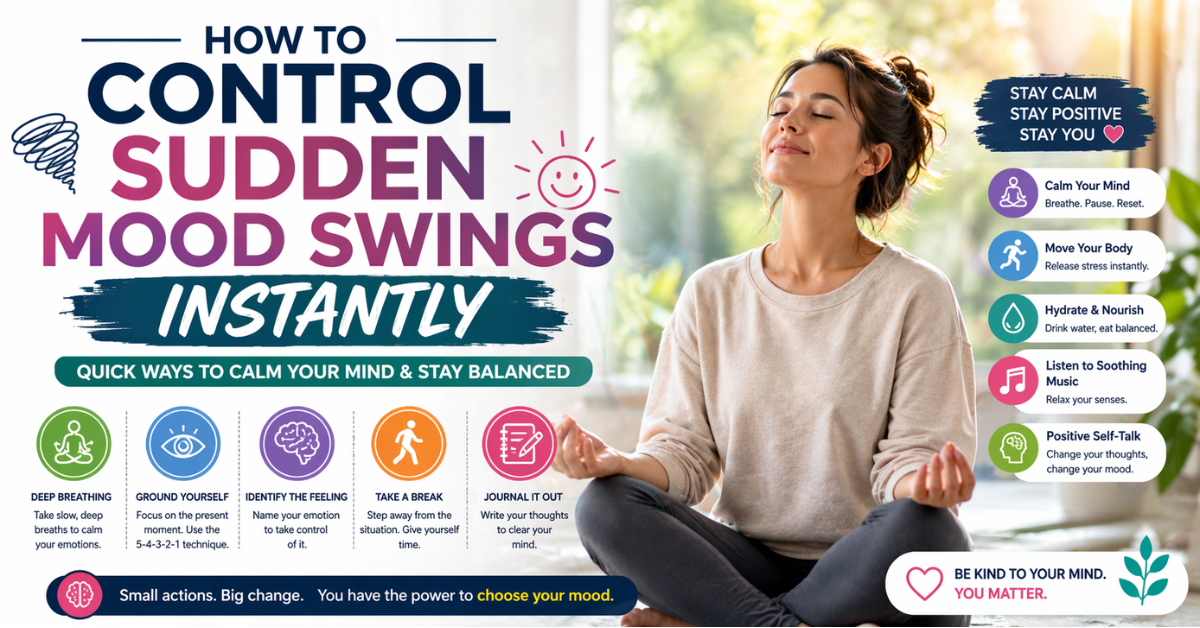
Sudden mood swings can feel overwhelming. One moment you’re calm, and the next you’re irritated, anxious, or emotionally drained. These rapid shifts are common and can happen due to stress, hormonal changes, lack of sleep, or even diet. The good news? You can manage and control them effectively with the right strategies.
In this guide, you’ll learn how to control sudden mood swings instantly, along with practical, science-backed techniques that actually work.
What Causes Sudden Mood Swings?
Before fixing the problem, it helps to understand the triggers. Mood swings don’t appear randomly—they’re often signals from your body or mind.
Common Causes:
- Stress and anxiety
- Hormonal fluctuations (especially in women)
- Poor sleep quality
- Blood sugar spikes and crashes
- Nutritional deficiencies
- Overthinking or emotional triggers
Identifying your personal triggers is the first step toward managing them effectively.
1. Pause and Practice Deep Breathing
Why It Works
When emotions spike, your nervous system goes into “fight or flight” mode. Deep breathing helps calm this response.
What to Do
- Inhale deeply for 4 seconds
- Hold for 4 seconds
- Exhale slowly for 6 seconds
- Repeat for 1–2 minutes
Instant Benefit
You’ll feel calmer, your heart rate slows, and your mind becomes clearer.
2. Use the “Name It to Tame It” Technique
Why It Works
Labelling your emotions helps your brain process them more effectively.
Example
Instead of saying “I feel bad,” say:
- “I feel anxious”
- “I feel frustrated”
- “I feel overwhelmed”
Instant Benefit
This reduces emotional intensity and gives you control over your reaction.
3. Change Your Physical State
Your body and mind are deeply connected. A quick physical shift can reset your mood.
Try This:
- Take a short walk
- Splash cold water on your face
- Stretch your body
- Do 10–15 jumping jacks
Instant Benefit
Movement releases endorphins (feel-good hormones), improving your mood quickly.
4. Check Your Blood Sugar
Low or fluctuating blood sugar levels can trigger irritability and mood swings.
Quick Fix:
- Eat a small healthy snack (fruit, nuts, yoghurt)
- Avoid sugary foods that cause crashes
Instant Benefit
Stabilises energy levels and improves emotional balance.
5. Practice the 5-4-3-2-1 Grounding Technique
Why It Works
This technique brings your focus back to the present moment.
Steps:
- 5 things you can see
- 4 things you can feel
- 3 things you can hear
- 2 things you can smell
- 1 thing you can taste
Instant Benefit
Reduces anxiety and emotional overwhelm within minutes.
6. Take a Break from the Trigger
Sometimes, the best solution is distance.
What to Do:
- Step away from the situation
- Avoid reacting immediately
- Give yourself 5–10 minutes
Instant Benefit
Prevents emotional outbursts and helps you respond calmly instead of reacting impulsively.
7. Use Positive Self-Talk
Your inner dialogue plays a powerful role in your mood.
Replace Thoughts Like:
- “I can’t handle this” → “I’ll get through this”
- “Everything is going wrong” → “This is temporary”
Instant Benefit
Shifts your mindset and reduces emotional intensity.
8. Listen to Calming Music
Music has a direct impact on your brain and emotions.
Try:
- Soft instrumental music
- Nature sounds
- Your favourite relaxing playlist
Instant Benefit
Lowers stress hormones and improves mood quickly.
9. Hydrate Your Body
Dehydration can affect brain function and mood.
Quick Tip:
Drink a glass of water when you feel irritable or low.
Instant Benefit
Improves mental clarity and emotional stability.
10. Use Mindfulness or Mini Meditation
You don’t need a long meditation session—just 2–3 minutes can help.
Simple Practice:
- Close your eyes
- Focus on your breath
- Let thoughts pass without judgment
Instant Benefit
Calms your mind and reduces emotional reactivity.
Long-Term Strategies to Prevent Mood Swings
While instant fixes are helpful, long-term habits are essential for lasting emotional balance.
1. Maintain a Healthy Sleep Routine
Aim for 7–8 hours of quality sleep daily.
2. Eat a Balanced Diet
Include proteins, healthy fats, and complex carbs.
3. Exercise Regularly
Even 20–30 minutes of daily activity can improve mood stability.
4. Limit Caffeine and Sugar
These can trigger mood fluctuations.
5. Track Your Mood Patterns
Understanding patterns helps you prepare for triggers.
When to Seek Professional Help
Occasional mood swings are normal. But if they are:
- Frequent or intense
- Affecting your daily life
- Leading to anxiety or depression
It’s important to consult a mental health professional.
Final Thoughts
Sudden mood swings can feel uncontrollable, but they don’t have to be. With simple techniques like deep breathing, movement, grounding, and mindful awareness, you can regain control within minutes.
The key is consistency. The more you practice these strategies, the easier it becomes to manage your emotions in real-time.
Remember, your emotions are signals—not problems. Learning to respond instead of react is the real power.




Comments (0)