
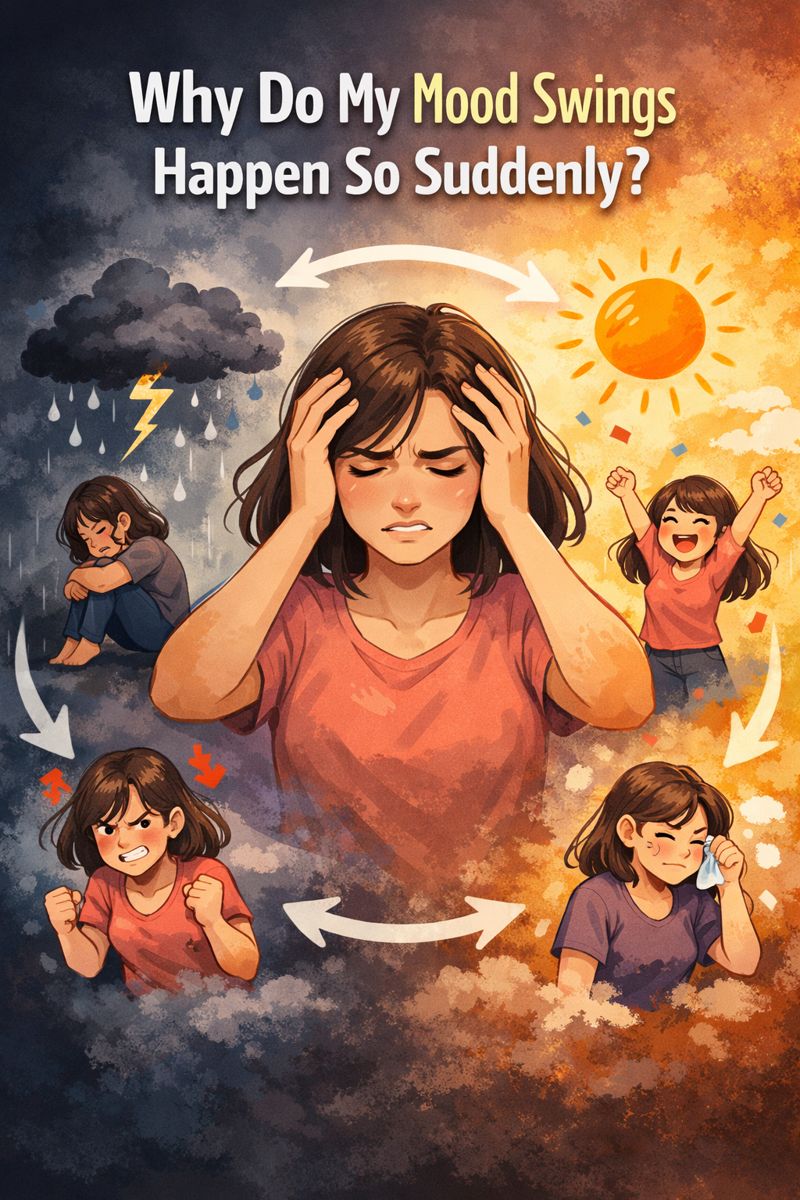
Sudden mood swings around a woman’s period are very common, and they’re usually linked to natural hormonal changes that happen throughout the menstrual cycle. While the emotional shifts can feel intense or even confusing, there are real biological reasons behind them.
The main cause is fluctuating hormones—especially estrogen and progesterone. During the first half of the menstrual cycle, estrogen gradually rises. Estrogen is closely connected to serotonin, a brain chemical that helps regulate mood, sleep, and emotions. Higher estrogen levels often make people feel more energetic, positive, and emotionally stable. However, after ovulation, estrogen levels drop and progesterone rises. This sudden shift can affect serotonin levels, leading to mood changes such as irritability, sadness, anxiety, or emotional sensitivity.
In the days leading up to a period (the luteal phase), both estrogen and progesterone eventually decline sharply. This hormonal drop is one of the biggest reasons mood swings can feel sudden and intense. The brain reacts quickly to these changes, which is why emotions may shift within hours or even minutes. Small frustrations may suddenly feel overwhelming, and emotions that were manageable earlier can feel amplified.
Another factor is premenstrual syndrome (PMS) or, in more severe cases, premenstrual dysphoric disorder (PMDD). PMS can cause mood swings, crying spells, anger, or feeling emotionally “out of control.” PMDD is a more intense form that can significantly affect daily life, relationships, and mental health. Women with PMDD are especially sensitive to normal hormonal changes, even though hormone levels themselves may be typical.
Physical symptoms also play a role. Fatigue, bloating, cramps, headaches, and sleep disturbances before or during a period can lower emotional tolerance. When the body feels uncomfortable or exhausted, the mind often becomes more reactive. Stress, poor sleep, caffeine, sugar, and lack of proper nutrition can make these mood changes feel even stronger.
It’s also important to remember that hormones don’t create emotions out of nowhere—they tend to intensify existing feelings. Stress, unresolved emotions, or mental health conditions like anxiety or depression may feel more pronounced during this time.
If sudden mood swings around your period interfere with your daily life, tracking your cycle can help you notice patterns and prepare for emotional shifts. Lifestyle changes such as regular exercise, balanced meals, stress management, and enough sleep often help stabilize mood. If symptoms feel severe or unmanageable, speaking with a healthcare provider is important—support and treatment options are available.
In short, sudden mood swings during periods are not “all in your head.” They’re a real, biological response to hormonal changes, and understanding them is the first step toward managing them with care and compassion.


Comments (0)